

How To Wrap Christmas Lights For Storage Without Tangling
Nothing dampens holiday decorating faster than opening a storage bin and finding a knotted ball of wire, a crushed bulb, or a strand that won’t light. The good news is that a few extra minutes during takedown saves you a frustrating hour next season.
To wrap Christmas lights for storage, unplug each strand by the plug, check it for damage, remove any clips, and wind it loosely around a piece of sturdy cardboard or a storage reel starting from one end. Then secure both plugs, label the strand, and store it somewhere dry.
You don’t need a fancy organization system to make this work. I’ve found that the simplest methods, like a scrap of cardboard or a spare hanger, are the ones you’ll keep using year after year. Once you know which method fits your closet, garage, or basement, you can put everything away quickly and pull it back out ready to hang.
My Recommendation:
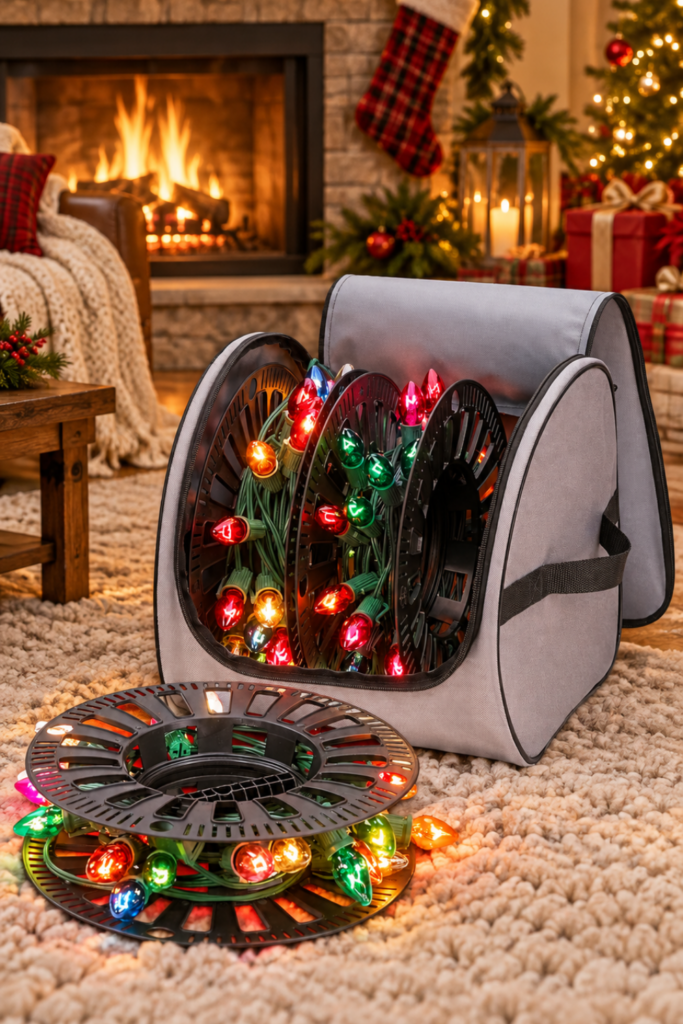
Premium Christmas Light Storage Bag
I like this setup because the bag comes with three reels, so you can keep several strands separated instead of stacking loose lights together.
How Do You Wrap a Strand Without Damaging It?
You protect a strand by handling the plug with care, checking the wire before it goes into storage, and winding it with gentle tension from a fixed starting point. Those habits keep the insulation intact and give you a strand that unwinds in the same order it went on.
Unplug, Inspect, and Remove Accessories
Start by unplugging the lights using the grip area on the plug. Pulling on the cord itself strains the wire and insulation, which raises the risk of shock or an electrical fire later.
Next, run the strand through your hands from end to end. Look for:
- Cracked or broken sockets
- Frayed, cracked, or bare wires
- Loose connections at the plugs
- Missing or shattered bulbs
If you find cracked wires or broken sockets, set that strand aside. Damaged sets should be thrown out or repaired before anyone uses them again.
Now remove light clips, hooks, and zip ties from the display. Clips left on the strand snag other wires in the bin and put pressure on the sockets. I like to drop the clips into a zip top bag and tape it to the lid of the light bin so they’re easy to find next year.
If the lights came down wet from snow or rain, lay them out indoors until they are completely dry. Packing damp wire leads to corrosion and mildew in a closed bin.
Wrap Loosely and Secure Both Ends
Pick one end and start there every time. Starting from the female plug end is a smart habit, because you can then plug the next strand into it as you unwind during decorating.
Tuck that plug into a slit in your cardboard or clip it to your reel. Then wind the strand with light, even tension. The key is to guide the wire into place without stretching it. Bulbs should sit flat against the wraps, with no sharp bends at the sockets.
When you reach the other end, secure it with a notch in the cardboard, a piece of painter’s tape, a twist tie, or a reusable cord wrap. If you use a zip tie, leave enough slack so you can snip it next season without nicking the wire.
Which Wrapping Method Works Best for Your Space?
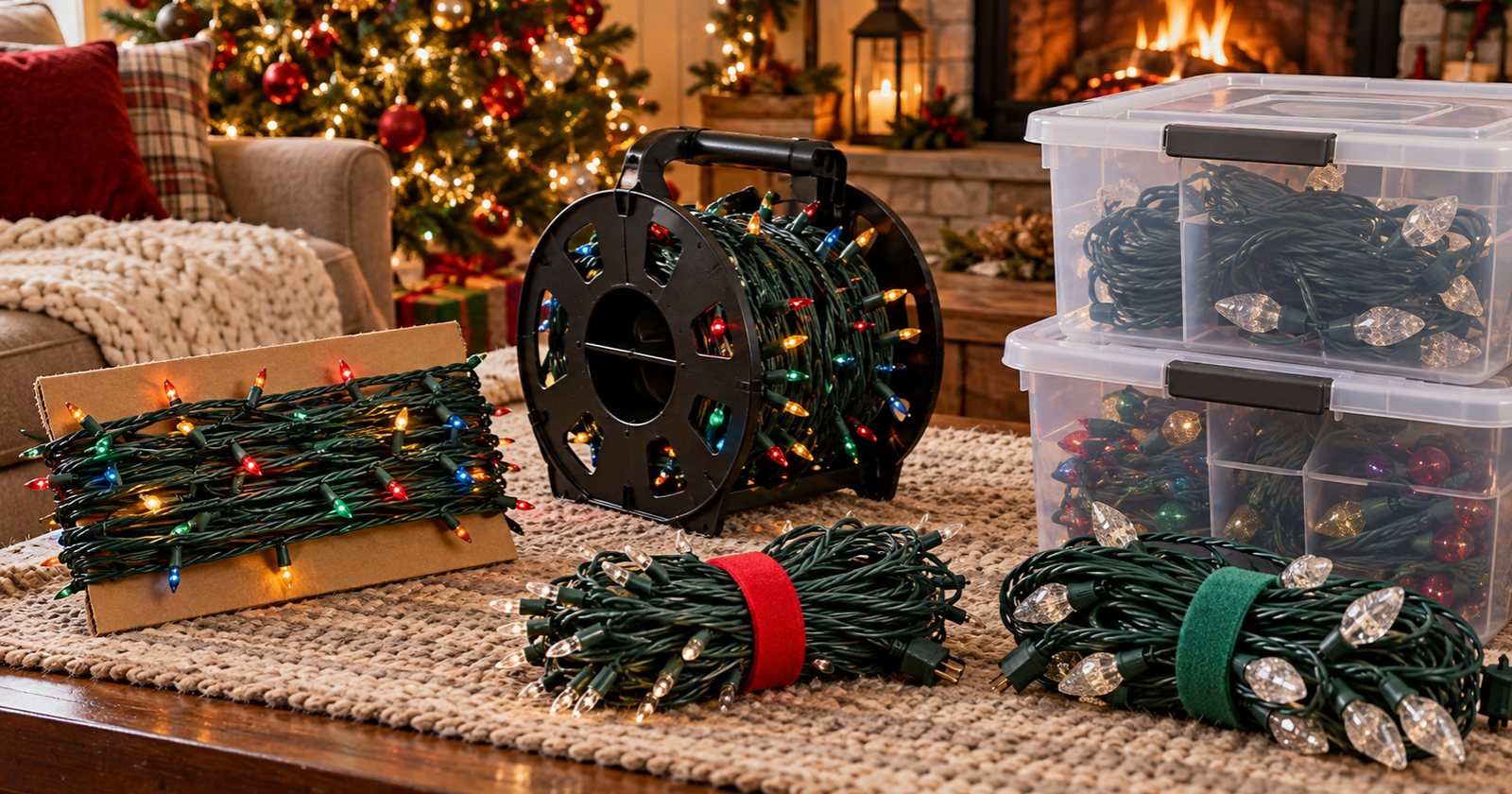
Sturdy cardboard is the easiest place to start for most homes, since it costs nothing and handles standard indoor strands well. Reels suit long outdoor runs, hangers save floor space in closets, and cord wraps or bags work best for short strands and extra protection.
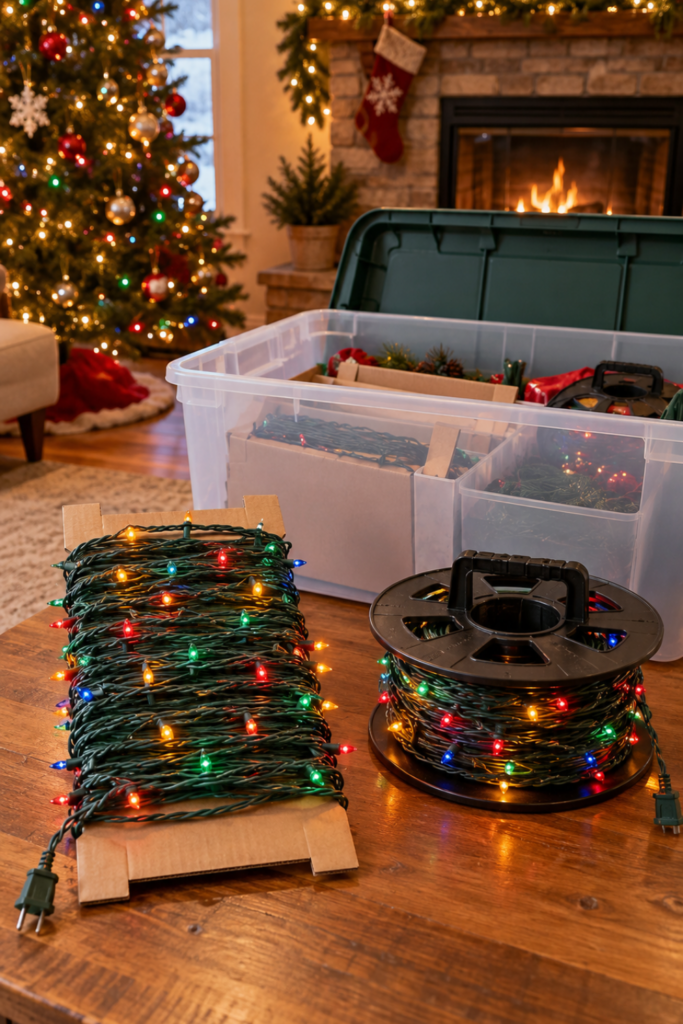
| Method | Cost | Best for | Main drawback |
|---|---|---|---|
| Cardboard | Free | Standard strands | Softens with moisture |
| Storage reel | Low to moderate | Long strands | Takes up more room |
| Clothes hanger | Free | Closet storage | Limited to shorter strands |
| Cord wraps | Low | Short strands | Less protection |
| Bags and containers | Low to moderate | Protected storage | Bulkier than bare wraps |
Sturdy Cardboard: a Free Option for Standard Strands
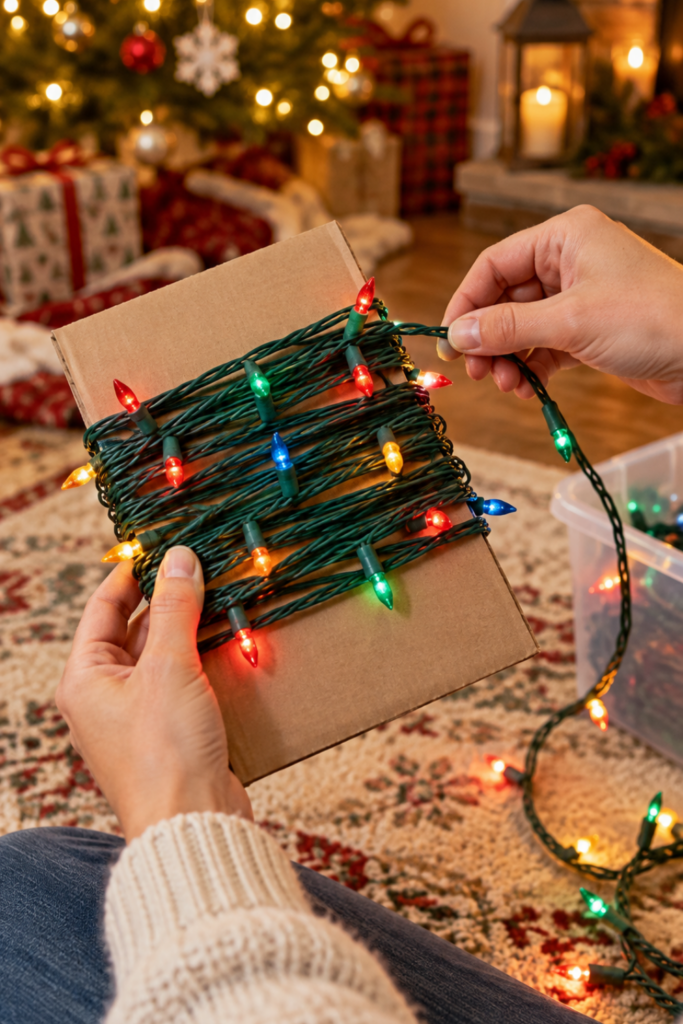
Cut a rectangle from a shipping box, about 8 by 12 inches. Snip a small slit on each short end to hold the plugs.
Tuck one plug into a slit, wind the lights around the cardboard’s long edges, and anchor the other plug in the opposite slit. For longer strands, use a wider piece so the wraps don’t pile up too thick.
I like this option because it’s free and stacks flat in a bin. The downside is that cardboard soaks up moisture and can attract pests, so keep it inside a sealed plastic container.
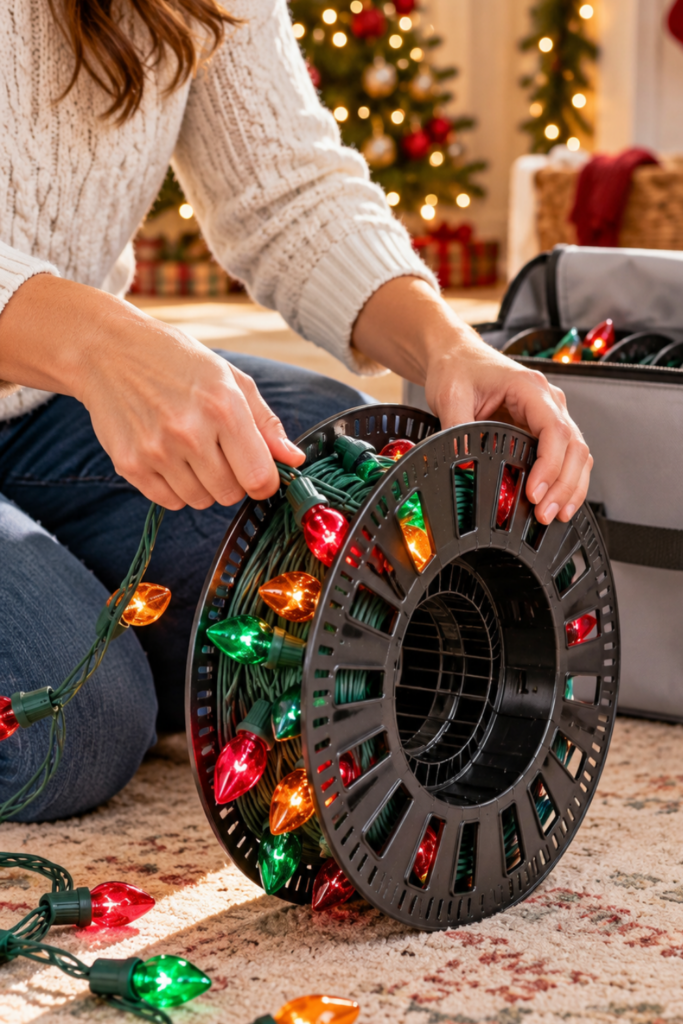
Storage Reels: an Easier Option for Long Strands
Plastic light reels have a center spool and a handle, which lets you crank long strands in quickly. Clip the starting plug to the reel, then turn the handle while guiding the wire with your other hand.
Reels hold their shape and protect bulbs better than bare wraps. They cost money and take up more shelf space, so they make the most sense for 50 foot runs or rooflines you hang every year.
Best Pick For Long Christmas Light Strands
I’ve found that a storage reel makes a big difference when you’re dealing with long outdoor Christmas lights. You can wind the strand neatly instead of fighting a pile of cord, and it’s much easier to pull everything back out next season.
Clothes Hangers: a Compact Option for Closets
A sturdy plastic hanger works like a mini reel. Hook one plug on the neck, wind the lights back and forth across the bottom bar, and secure the end with a twist tie.
Then hang it in a coat or utility closet. This keeps lights off the floor and out of crowded bins. Thin wire hangers bend under heavy strands, so stick with plastic or wood and keep this method for shorter lights.
Cable Organizers and Reusable Cord Wraps: Options for Short Strands
For tabletop strands, battery lights, or short extension sections, coil the wire loosely in a loop about the size of your hand. Close it with a hook and loop cord wrap or a small cable organizer.
These cost only a few dollars, take seconds to use, and let you reuse the same ties every season. They offer little crush protection, so place wrapped coils on top of heavier items in your bin.
Light Storage Bags and Containers: Options for Protected Storage
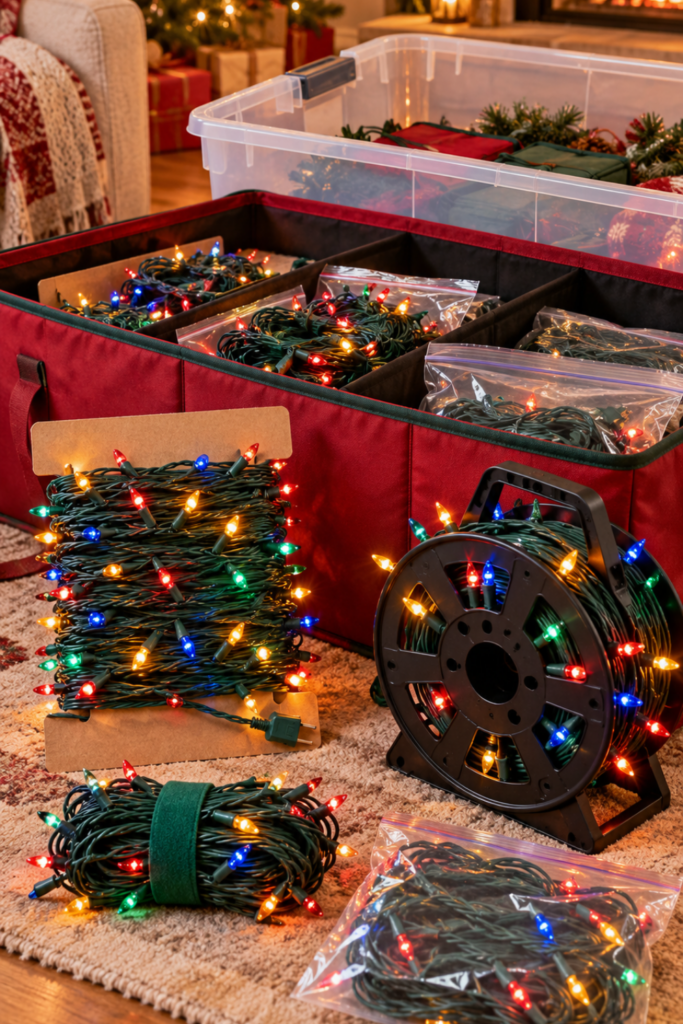
Once a strand is wrapped, you can slide it into its own plastic bag, a zippered light storage bag, or a clear bin with a tight lid. Individual bags keep strands from knotting into each other.
Clear plastic bins let you see what’s inside and help keep moisture and pests out. Some bags come with built in reels. The trade off is bulk, so measure your shelf before you buy.
How Should You Wrap Different Types of Lights?
Most standard strings wrap the same way, while icicle lights need a roll up method because their hanging drops snag easily. Long outdoor strands and multi strand displays benefit from reels and a clear labeling plan.
Can You Wrap LED Lights Like Traditional String Lights?
Yes. LED and incandescent mini lights, along with C6, M5, and T5 strings, all wrap well on cardboard or reels using the same loose, one end first approach.
I always recommend paying extra attention to where the bulbs meet the wire. Sharp bends at those joints stress the connection. Keep your wraps wide enough that each socket lies flat, and never cinch the strand tight to squeeze it into a smaller bin.
How Do You Keep Icicle Lights from Tangling?
Icicle lights roll up best on a sheet of plastic or fabric. Here’s the process:
- Lay out a sheet a little longer than your strand on a clean floor.
- Place the strand along the sheet’s length, straightening every drop so it stays inside the edges.
- Add extra strands a few inches apart if you like, without letting them overlap.
- Fold one edge over the lights and roll the sheet up.
- Secure the roll with tape or a rubber band.
For a quicker option, wrap the lights around your wrist five times, slide the loop off, wrap the remaining line around that loop five times, and repeat. Fasten a loose zip tie through the center. It’s faster, though the drops are more likely to catch next season.
How Do You Manage Long Outdoor Strands?
Long runs come off the house more easily on a reel, since cranking keeps the wire moving without dragging it across the ground. If your roofline uses several connected strands, you can roll the whole run onto a long plastic sheet so it comes out connected next year.
On a breezy day, weigh the sheet edges down with planters or patio blocks. Make sure outdoor lights are fully dry before storing them.
How Do You Keep Multiple Strands Separate?
Wrap each strand on its own cardboard, reel, or hanger, then bag each one separately. Stacking several strands on one piece of cardboard saves a few seconds now and costs you plenty of untangling later.
Keep indoor and outdoor lights in separate bins or clearly labeled groups. That way you won’t accidentally hang an indoor only set outside.
How Do You Label and Store Wrapped Lights?
Labeling each strand by where it hung and storing it in a cool, dry, protected spot turns next year’s setup into a quick matching game. A little masking tape and a marker handle most of the work.
What Should You Write on Each Label?
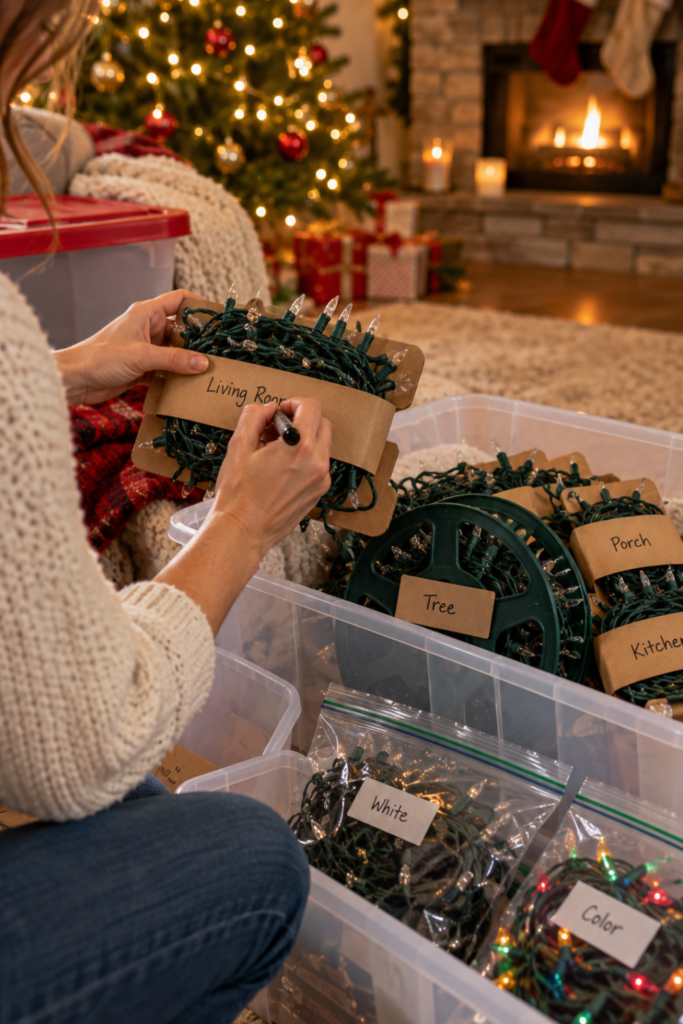
Write the location first, since that’s how you’ll look for it. Good details to include:
- Where it hung (front porch, tree top, kitchen window)
- Indoor or outdoor use
- Length or bulb type, like “25 ft LED warm white”
- The year it came down and whether it worked
Put the label on the cardboard or reel and also on the bag. Unlabeled strands end up tested one by one on the living room floor, and that’s the part of decorating nobody enjoys.
Where Should You Store Lights to Avoid Moisture and Crushing?
Choose a dry spot away from children and pets, with steady temperatures. An interior closet shelf, a spot under the bed, or a high shelf in a utility room all work well.
Skip the attic if you can. The high heat common in attics shortens the life of Christmas lights. Place light bins on top of the stack, never under heavy boxes of dishes or ornaments that press on bulbs.
Can You Store Christmas Lights in a Garage or Basement?
Yes, as long as you control moisture. Use a sealed plastic bin with a tight lid, and set it on a shelf a few inches off a concrete floor, which draws dampness.
Swap cardboard wraps for plastic reels or hangers in these spaces, since cardboard softens and invites pests. A packet or two of moisture absorber in the bin adds a bit of extra protection in a humid basement.
FAQ’s About How To Wrap Christmas Lights For Storage

What is the best way to store Christmas lights without tangling?
The best way to store Christmas lights is to wind each strand loosely around sturdy cardboard, a hanger, or a storage reel and keep each strand separate.
How can I improve Christmas lights organization after the holidays?
For easier Christmas lights organization when storing Christmas lights, label each wrapped strand by location, separate indoor and outdoor sets, and place them in a dry storage bin.
What are easy Christmas light storage ideas for icicle lights?
One of the simplest Christmas light storage ideas for icicle lights is to straighten the hanging drops on fabric or plastic, gently roll the sheet, and store it in a protected container.
Final Thoughts About How To Wrap Christmas Lights For Storage
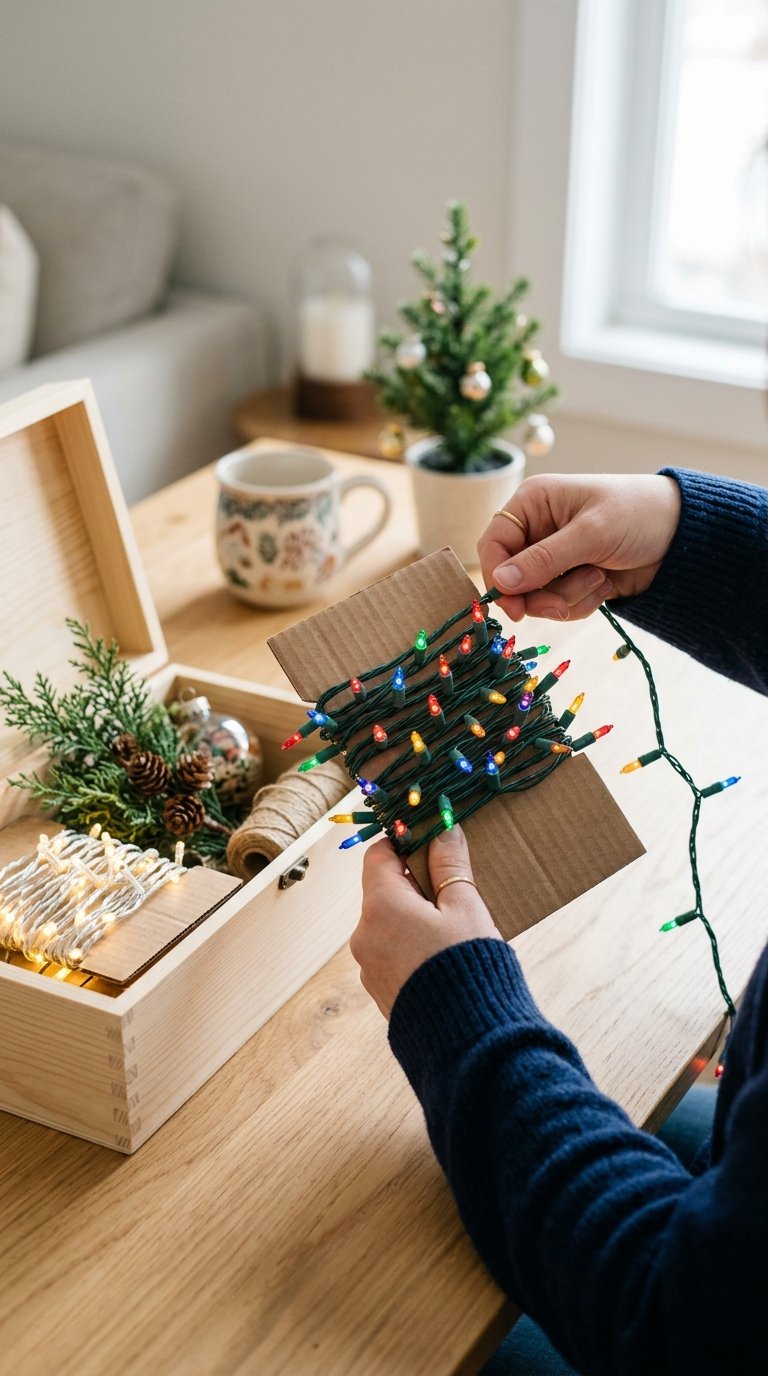
The best storage method is the one that fits your space and budget and feels easy enough to repeat. Cardboard costs nothing, reels save time on long strands, and hangers make smart use of closet space.
Whatever you pick, stick with the same sequence each year:
- Unplug by the plug, never the cord.
- Inspect and discard damaged strands.
- Remove clips and let wet lights dry.
- Wrap loosely from one end.
- Secure both plugs.
- Label by location.
- Store in a dry, sealed bin.
Once you know how to wrap Christmas lights for storage, taking down the holiday decorations gets a lot easier from year to year. I always recommend using a method you’ll actually repeat, whether that’s free cardboard, a hanger in the utility closet, or a reel for those long outdoor strands.
Keep the wraps loose, label each strand, and make sure everything is completely dry before it goes into the bin. A few minutes now can save you from sitting on the living room floor untangling lights next Christmas.

Willie Drew
I’m Willie Drew, and I’m here to help you turn your home into a space you’re proud to show off using simple projects, smart tools, and realistic budgets.