

How To Hang Floating Shelves With Easy Steps For Beginners
I’ve installed floating shelves in small spaces, kitchens, and living rooms, and once you understand how to hang floating shelves the right way, it becomes one of the most satisfying DIY projects you can do.
This is one of those upgrades that looks custom but is totally doable with basic tools.
The key is taking your time with measuring, anchoring, and leveling so everything feels solid.
I’ll walk you through what actually matters so your shelves look clean and stay secure.
Step 1: Pick Shelves That Fit Your Room And Needs

Before you start putting shelves up, think about what you want to display and where.
Shelves come in different materials, like warm wood, clear glass, or tough metal. Match the shelf look with your room’s style to keep things cozy or fresh.
- Wood works well for inviting spaces like living rooms or kitchens.
- Glass suits bathrooms or clean, modern spots.
- Metal fits in offices or industrial style rooms.
Also, check how much weight your shelves can hold. If you’re adding books or heavy stuff, choose shelves with strong brackets to keep them steady.
Don’t forget shelf depth it should fit what you plan to place on it, not too big or too small.
Step 2: Get Your Measurements Right

Take your measuring tape, pencil, level, and stud finder to the wall.
First, choose where your shelf will go think about how high and how far apart you want them if you have more than one.
Use the stud finder to locate the wall studs; these are the strong spots to hold your shelf safely.
Lightly mark where you’ll drill with your pencil. Before you start, double-check those marks with your level to keep everything straight.
A good rule of thumb is to leave around 10 to 15 inches between shelves for a balanced look.
Step 3: Attach The Support Brackets

Start by drilling small pilot holes where you marked your wall.
If you’re not hitting a stud, use drywall anchors or heavy-duty wall anchors to keep things secure.
Next, take your floating shelf brackets and screw them firmly into those holes using a power drill and the right drill bits masonry bits if you’re working with brick or stone walls.
Give the brackets a gentle pull to make sure they’re steady before adding your shelf. This step is key to holding up your favorite decorations safely.
Step 4: Secure And Check Your Shelf’s Level

Slide the shelf gently onto the brackets until it fits snugly. You might feel it click into place that’s a good sign!
Next, grab your long level and check if the shelf is perfectly straight. If it’s a bit off, use your screwdriver to tweak the screws or anchors until everything looks just right.
Don’t forget to wipe away any pencil marks or dust before you start styling your new shelf!
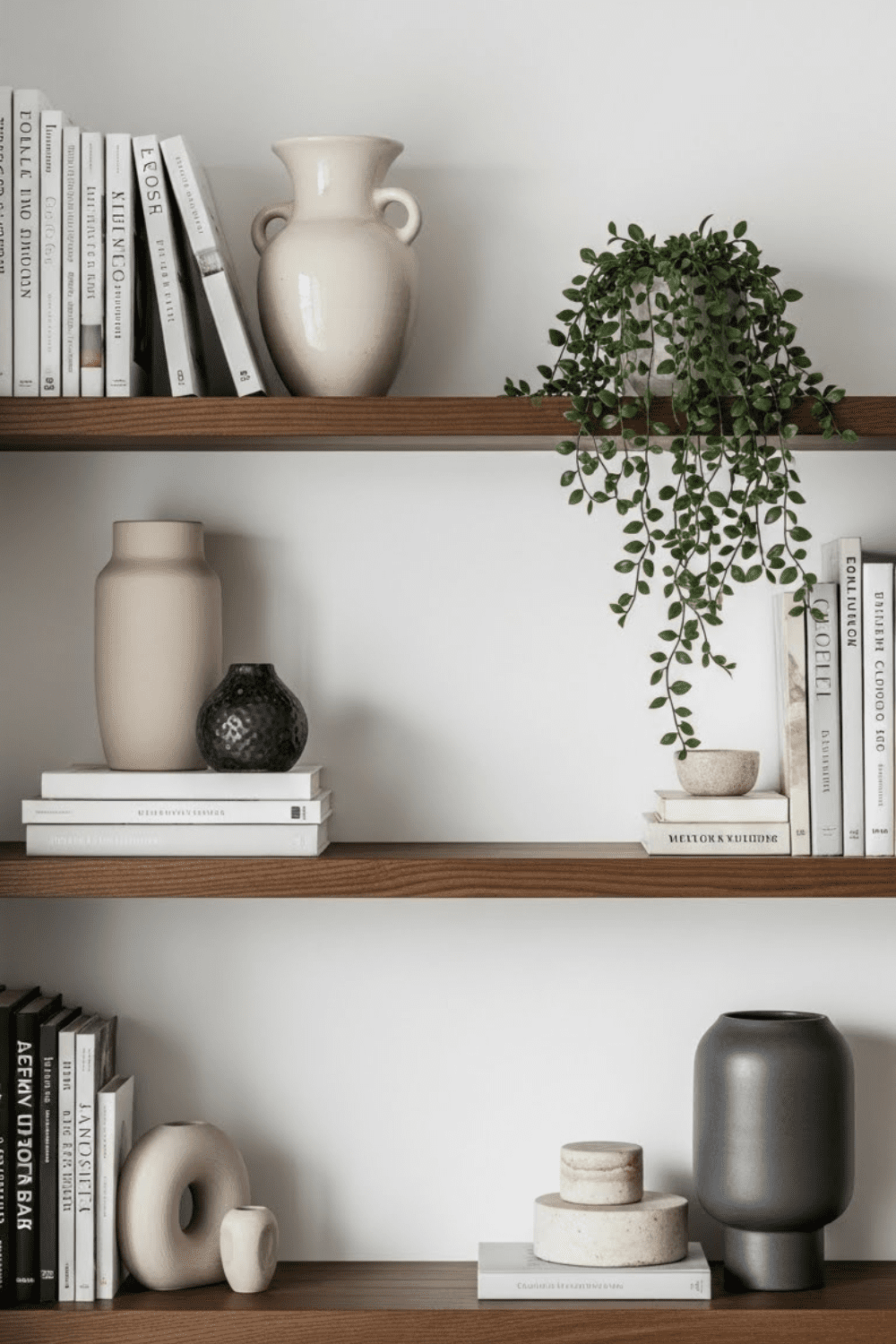
Step 5: Give Your Floating Shelves That Perfect Touch

Now that your shelves are up, it’s time to style them so they look just right.
Start by mixing different heights and textures think books next to a vase or a small plant.
Avoid crowding the space; leaving some empty spots helps everything breathe and feel light.
Try layering smaller pieces in front of bigger ones for a little extra depth that draws the eye.
Here’s a simple combo to try:
- Stack of books with a candle on top
- A framed photo leaning against the wall
- A small potted plant to add a fresh pop of green
You don’t need a lot to make your shelves feel cozy and stylish.
FAQ’s About My How To Hang Floating Shelves
How Do You Hang Floating Shelves Securely On Drywall?
To hang floating shelves on drywall, you need to use wall studs or heavy duty drywall anchors designed for weight bearing diy wall shelves.
What Tools Do You Need To Install Floating Shelves?
Most floating shelves installation projects only require a drill, level, stud finder, measuring tape, and screwdriver.
How Far Apart Should Floating Shelves Be Spaced?
Floating shelves spacing typically looks best at about 10 to 15 inches apart, depending on wall shelves design and what you plan to display.
Final Touch Big Impact
Floating shelves are one of the easiest upgrades you can do in an afternoon—and they instantly make a room feel more pulled together.
Measure carefully, hit studs when you can (use strong anchors when you can’t), and take an extra minute to level before you tighten everything down.
Then style with a few simple pieces and let the shelf do the work. Small change, big impact.

Willie Drew
I’m Willie Drew, and I’m here to help you turn your home into a space you’re proud to show off using simple projects, smart tools, and realistic budgets.