

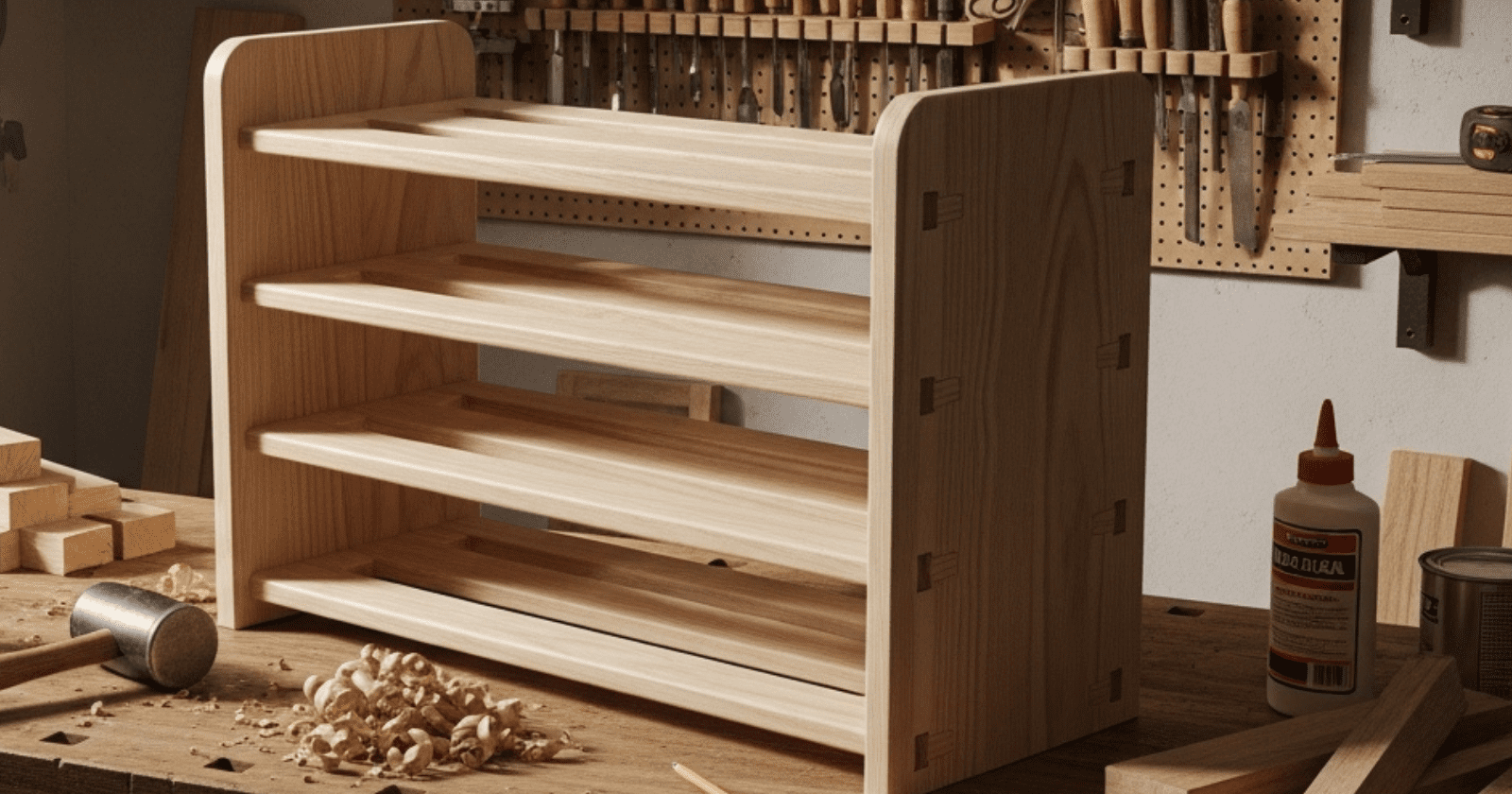
How To Build A Shoe Rack Using Simple Lumber
I built my first shoe rack after getting tired of shoes piling up near the door and taking over the floor.
Learning how to build a shoe rack turned out to be one of the easiest DIY projects I’ve tackled, even with basic tools.
It helped me organize my space, save money, and create something that actually fits my home.
If you want simple storage that looks good and works hard, this is a great place to start.
Shoe Rack Design Guide

Picking the right shoe rack design starts with understanding your space, your shoe collection, and how you actually use your home.
A well planned rack keeps shoes organized, easy to grab, and out of the way without feeling bulky or out of place.
Whether you want something simple or more built in looking, the right design makes all the difference.
Measure Space For Shoe Storage
Start by measuring the exact spot where your shoe rack will go.
Take note of the width, height, and depth so your finished rack fits comfortably without blocking walkways or doors.
Entryways, closets, and narrow hallways often benefit from vertical or slim designs that save floor space.
Next, think about how many shoes you need to store and what types you own most.
Everyday shoes, boots, and kids’ shoes all need different spacing. Open shelves work well for quick access, while cubbies help keep pairs neatly separated.
The goal is to choose a layout that keeps shoes organized without crowding the space.
Popular Shoe Rack Styles
There are several DIY shoe rack styles that work well in different homes:
- Open shoe shelves for quick, easy access in entryways
- Shoe cubbies that give each pair its own spot
- Wood shoe cabinets to hide clutter and protect shoes from dust
- Vertical shoe racks for small spaces and tight areas
- Industrial-style racks using wood and pipe for a rustic look
Choose a style that fits both your storage needs and your home’s overall look. A shoe rack should feel like part of your space, not an afterthought.
Shoe Rack Materials And Tools
Your material choice affects both durability and appearance. Wood is a popular option because it’s sturdy and easy to customize.
Pine and plywood are affordable and beginner-friendly, while hardwoods like oak offer extra strength and a more polished finish.
For a modern or industrial look, metal pipes paired with wood shelves work well. Lighter options like crates or laminate panels can also be used for smaller collections.
Most shoe racks require basic tools like a saw, drill, measuring tape, screws, and sandpaper, making this an approachable project for most DIYers
Deciding on Budget and Skill Level
Be realistic about your budget and experience level before choosing a design.
Simple open racks are quick to build and cost less, especially if you use scrap wood.
More detailed builds, like enclosed cabinets or custom cubbies, take more time and precision but offer a finished, furniture-style result.
If you’re new to DIY projects, start with a straightforward design and build confidence as you go.
You’ll still end up with a functional shoe rack that keeps your space organized and clutter-free.
Gather Supplies And Plan
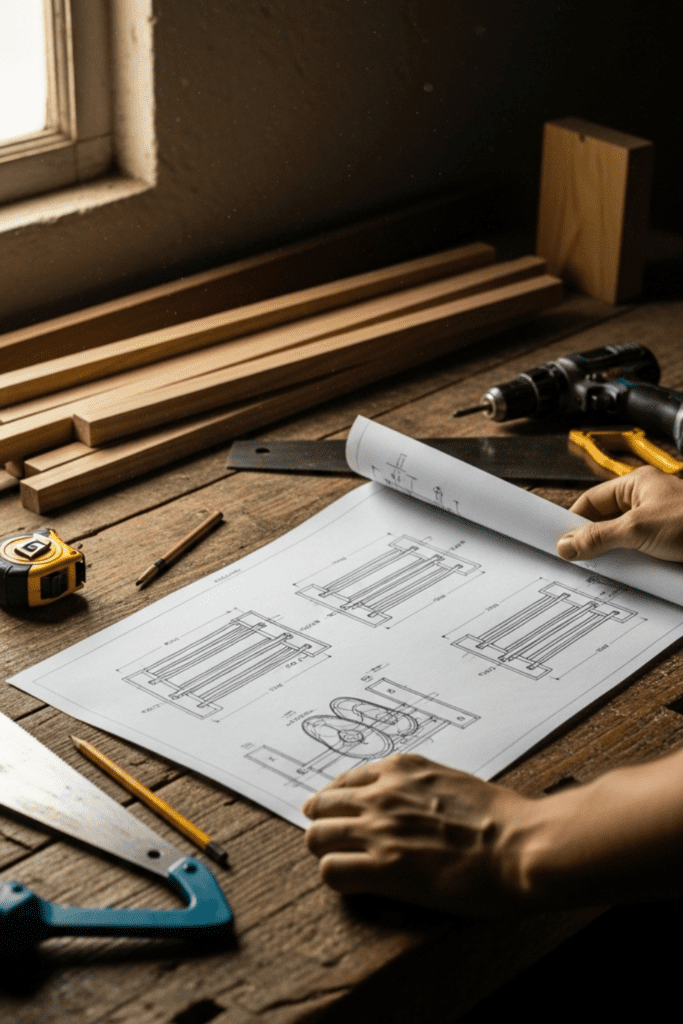
Before you start building, take a few minutes to gather tools, pick your materials, and map out a simple plan.
This makes the build smoother, helps you avoid mistakes, and keeps the finished shoe rack sturdy and level.
Essential Shoe Rack Tools
Most DIY shoe racks only need basic tools. A power drill handles pilot holes and screws.
A saw (circular, miter, or even a handsaw) cuts boards to size.
Sandpaper or a sanding block smooths edges so the rack looks finished and feels safe to handle.
A few extras make the job easier: a measuring tape, a square for straight corners, and clamps to hold pieces steady while you attach them.
Keep a pencil nearby for marking cut lines, and use wood glue along with screws for a stronger build.
Wood Types For Shoe Racks
The material you choose affects the look, cost, and durability.
- Pine is budget-friendly and easy to work with, which makes it a great starter option.
- Plywood is stable and works well for shelves and sides, especially if you want smooth, flat pieces.
- Hardwoods like oak or maple cost more, but they hold up well and look more furniture-like.
If you want to get creative, you can also build a rack from scrap wood, reclaimed boards, or even stacked crates.
For an industrial look, wood shelves paired with metal pipe supports can add style without getting complicated.can add style without getting complicated.
Shoe Rack Hardware Basics
A shoe rack holds a lot of weight over time, so hardware choices matter.
Pocket holes are a clean way to join boards while hiding screws. A pocket hole jig helps, but you can still build a strong rack without one.
If you want extra stability, corner braces or small L-brackets reinforce joints and reduce wobble.
Use screws that are long enough to hold tight without poking through the other side.
For best strength, combine wood glue + screws, and pre-drill holes to prevent splitting.
Create Shoe Rack Plan
A simple plan saves you from guesswork. Start with the space measurements, then decide how many shelves or cubbies you want.
Leave enough clearance for your most common shoe type, and add extra height if you plan to store boots.
Sketch a quick layout on paper or use a basic plan online and adjust the measurements to fit your space.
Keep shelf spacing even, and leave a little airflow between shelves so shoes can dry out after use.
A clear plan makes the whole project faster, cleaner, and easier to finish well.
Simple Shoe Rack Build

Building a shoe rack comes down to accurate measurements, a solid frame, and careful assembly.
Take your time with each step, and you’ll end up with a sturdy, good-looking rack that holds up to daily use.
Measure And Cut Wood
Start by measuring the space where the shoe rack will sit.
Write down the width, height, and depth so the finished rack fits without blocking walkways or doors. If you plan to store boots, allow extra height between shelves.
Choose boards that are about ¾ inch thick to prevent sagging. Mark all cuts with a pencil and square to keep lines straight.
Cut slowly and double check measurements before each cut.
Wearing safety glasses and keeping your hands clear of the blade helps prevent mistakes and injuries.
Build Shelves And Frames
Begin by assembling the frame. Attach the horizontal support boards between the two side panels.
These supports hold the shelves and keep the rack square.
Once the frame is secure, place the shelf boards on top of the supports. Space them evenly so shoes slide in and out easily.
Pre-drill holes, then fasten each shelf with screws or nails. For a basic rack, three shelves usually hold about 9 to 12 pairs of shoes.
Check for level as you work. Adjust before tightening screws fully to keep everything straight.
Stable Shoe Rack Assembly Tips
Tighten screws until snug, but avoid overdriving them into the wood. If the rack feels loose, add corner braces or an extra support board across the back.
Using clamps during assembly helps keep boards aligned while fastening. A level ensures shelves sit flat and don’t tilt over time.
For taller racks, securing the unit to the wall adds stability and prevents tipping, especially in homes with kids or pets.
Shoe Rack Finishing Touches
Once assembled, sand the entire rack to smooth rough edges and corners. Wipe away dust with a clean cloth before finishing.
Paint adds color and personality, while stain highlights the wood grain. Apply thin, even coats and let each layer dry fully.
Finish with a clear protective coat to guard against scuffs, moisture, and daily wear.
After drying, your shoe rack is ready to use and built to last.
Shoe Rack Storage Solutions

Customizing your shoe rack helps it work harder for your space.
Whether you need seating, want to save floor space, or have specific shoes to store, small design changes can make a big difference in how useful and organized your rack feels.
Shoe Storage Bench Ideas
A shoe storage bench adds both seating and organization in one piece.
These work especially well in entryways and mudrooms where shoes come on and off throughout the day.
Open cubbies underneath keep shoes easy to grab, while the bench top gives you a place to sit.
For tighter spaces, a slim mudroom bench with shoe storage keeps clutter contained without crowding the room.
Adding baskets, drawers, or hooks above the bench helps create a full drop zone for coats, bags, and shoes in one compact setup.
FAQ’s About My How To Build A Shoe Rack
How Hard Is It To Build A Shoe Rack For Beginners?
Learning how to build a shoe rack is beginner friendly and does not require advanced woodworking skills.
What Wood Works Best For A DIY Shoe Rack?
Pine and plywood are popular choices when building a shoe rack because they are affordable and easy to work with.
How Much Space Do I Need For A Shoe Rack?
The space needed depends on how many shoes you plan to store and where the rack will go.
Crate Shoe Rack Ideas
Crates and repurposed wood boxes are an easy way to build a flexible shoe rack. Stack them vertically or arrange them in a grid to fit your wall or closet.
Painting or staining crates helps them look intentional rather than temporary.
Wall-mounted shoe racks are great for small homes because they free up floor space.
Simple shelves, narrow ledges, or angled racks keep shoes visible and organized without blocking walkways.
Corner shoe racks make use of space that often goes unused.
A small corner unit can store several pairs while staying out of the way, making it ideal for apartments and narrow entryways.
Stackable Shoe Rack Ideas
If your shoe collection changes often, adjustable shelves give you more flexibility. You can raise shelves for boots or lower them for flats and sneakers as needed.
Stackable shoe racks are useful in closets where vertical space is available. Adding sections over time lets you expand storage without replacing the entire unit.
For larger households, a bigger shoe rack with multiple shelves or cubbies keeps everything in one place.
Mixing open shelves with closed storage helps balance easy access and a clean look.
Shoe Storage For Small Spaces
Boots need extra height to stay upright and avoid creasing. Deep cubbies or taller shelf spacing keeps them protected and easy to store.
For kids, low shoe racks encourage independence and make cleanup easier. Simple, open designs work best so shoes can be put away quickly.
In small spaces, slim shoe racks or narrow cabinets fit neatly along walls or inside closets.
Choosing vertical designs helps maximize storage without making the area feel crowded.

Willie Drew
I’m Willie Drew, and I’m here to help you turn your home into a space you’re proud to show off using simple projects, smart tools, and realistic budgets.