

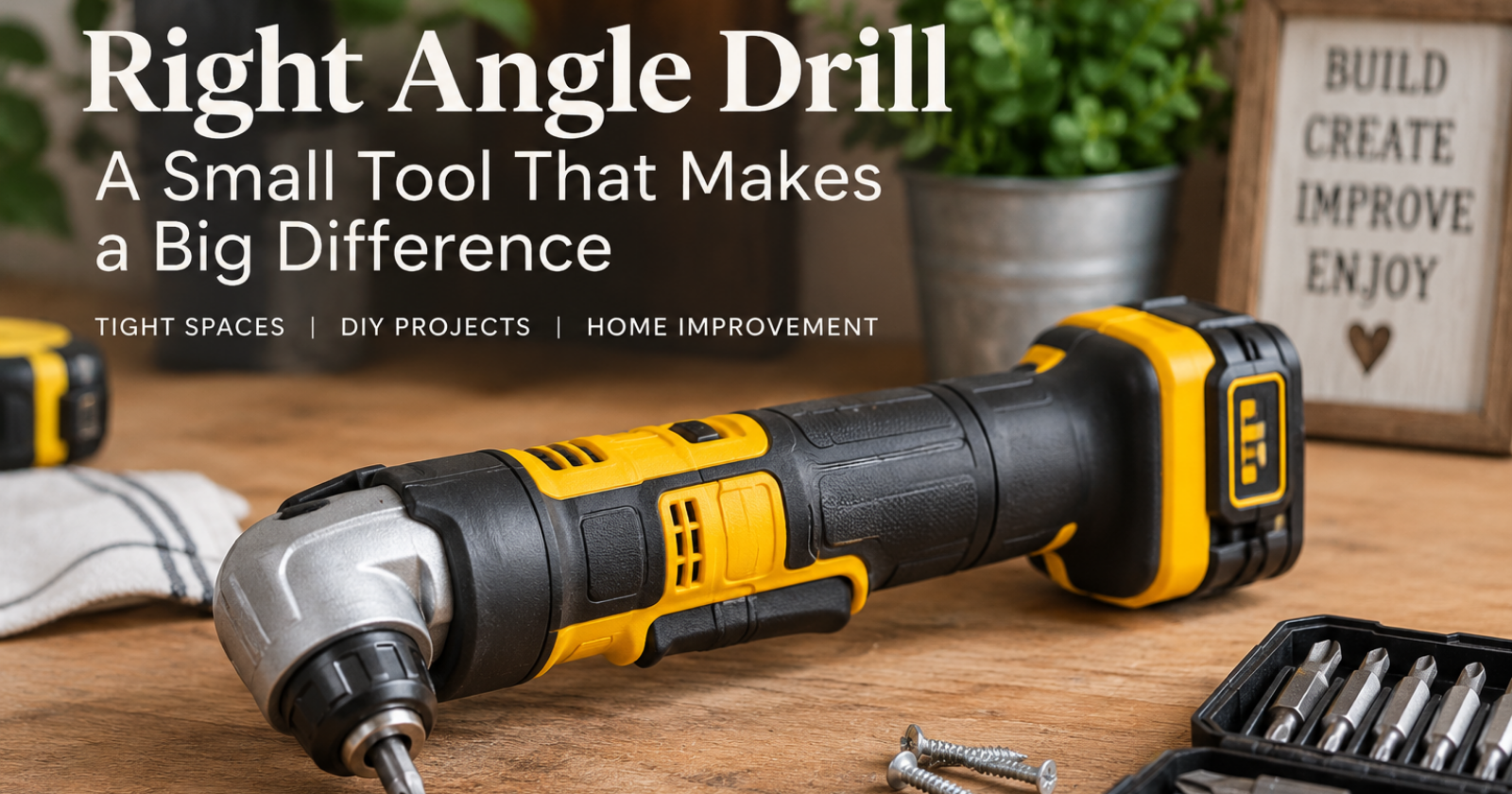
What Is A Right Angle Drill Used For?
If you have ever tried to squeeze a regular drill between wall studs, inside a cabinet, or behind plumbing, you already know how quickly space can become the biggest problem. That is exactly where a right angle drill earns its place in the toolbox.
What is a right angle drill used for? It is mainly used for drilling holes and driving fasteners in tight or awkward spaces where a standard drill is too long to fit comfortably. I have found these drills especially useful for remodeling, electrical work, plumbing, cabinet projects, and jobs around floor joists and wall framing.
In this guide, I will walk you through where a right angle drill works best, when an adapter may be enough, what to look for in the tool, and a few mistakes that can save you some frustration on your next project.
What Is a Right Angle Drill?
A right angle drill is a drill with the chuck positioned at roughly a 90 degree angle to the body of the tool. Instead of the bit sticking straight out from the front like a normal drill, the shorter angled head lets you work from the side.
The key is clearance. A regular drill may work perfectly in an open room but become almost useless when you are trying to drill between closely spaced framing or inside a small vanity. A right angle drill gives you another way to reach the work without forcing the tool into an uncomfortable position.
Right angle drills are available in compact cordless models as well as larger high torque versions made for demanding framing, plumbing, and electrical work. The right choice really comes down to the jobs you expect the tool to handle.
7 Common Uses For A Right Angle Drill
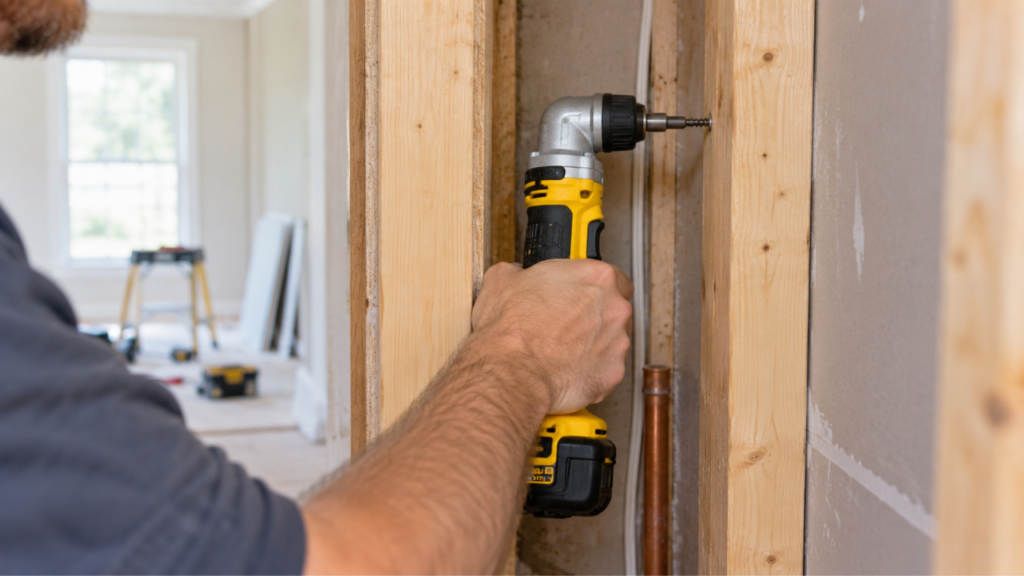
1. Drilling Between Wall Studs
One of the most common uses for a right angle drill is drilling through wall studs when there is not enough room to position a normal drill.
This comes up often when adding electrical wiring, plumbing lines, or low voltage cable during a remodel. The shorter head makes it easier to center the bit on the stud while keeping the tool under control.
2. Working Between Floor Joists
Floor joists can create the same clearance problem. When you are working from a basement, crawl space, or unfinished ceiling, a right angle drill can help you bore holes for wiring, plumbing, or other home improvements.
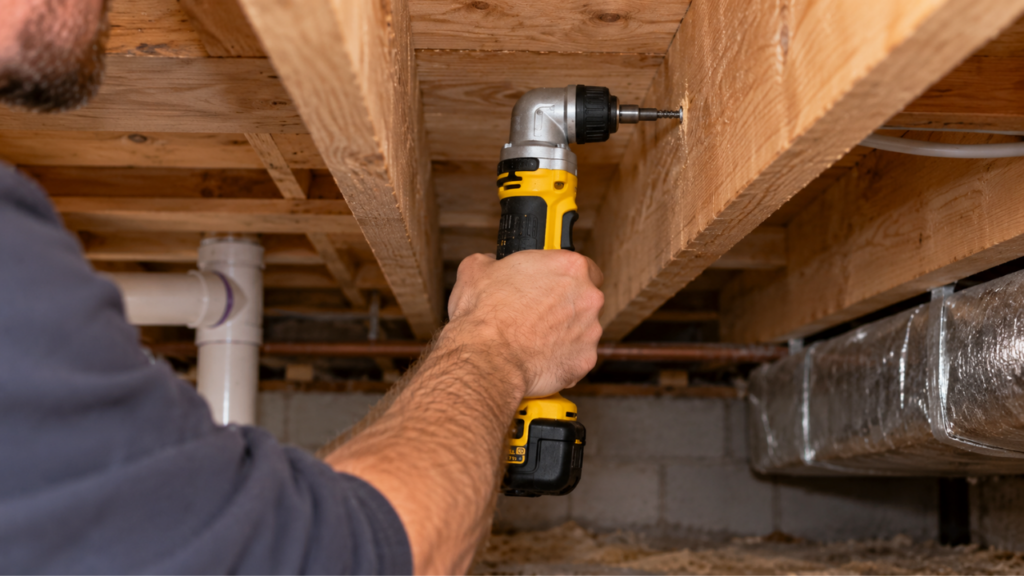
Always check what is on the other side before drilling through framing. Plumbing, electrical wiring, ductwork, and structural components may be hidden from view.
3. Drilling Inside Cabinets and Vanities
I love how useful a compact right angle drill can be inside kitchen cabinets and bathroom vanities. These spaces often look roomy until you try to fit a full size drill inside them.
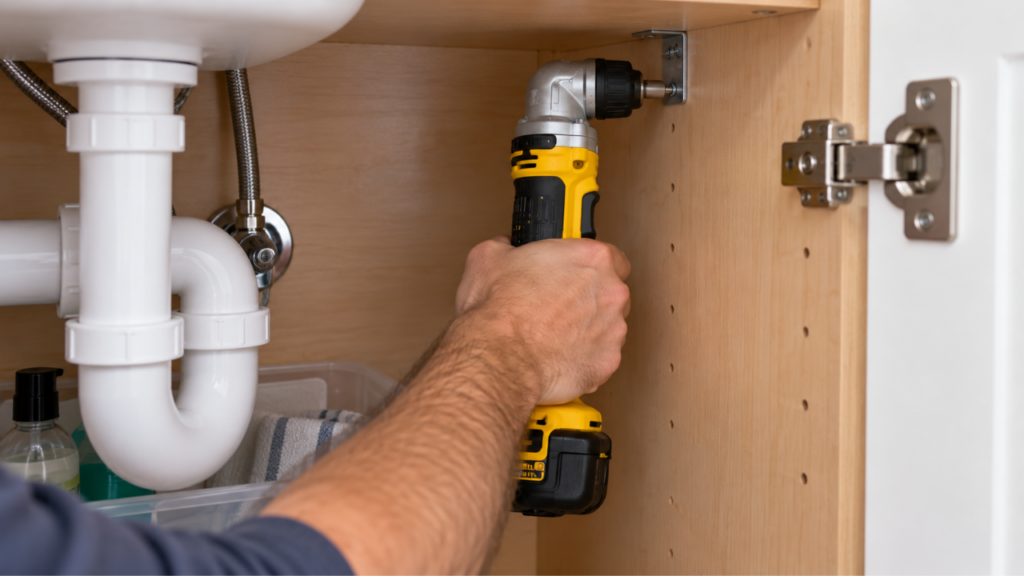
You might use one to drill a hole for a water line, install cabinet hardware, make an opening for wiring, or drive a screw near the side of the cabinet where a regular drill cannot line up properly.
4. Plumbing and Electrical Projects
Plumbers and electricians often need to work around framing, pipes, wiring, and other obstacles. A right angle drill gives you better access without requiring a huge opening around the work area.
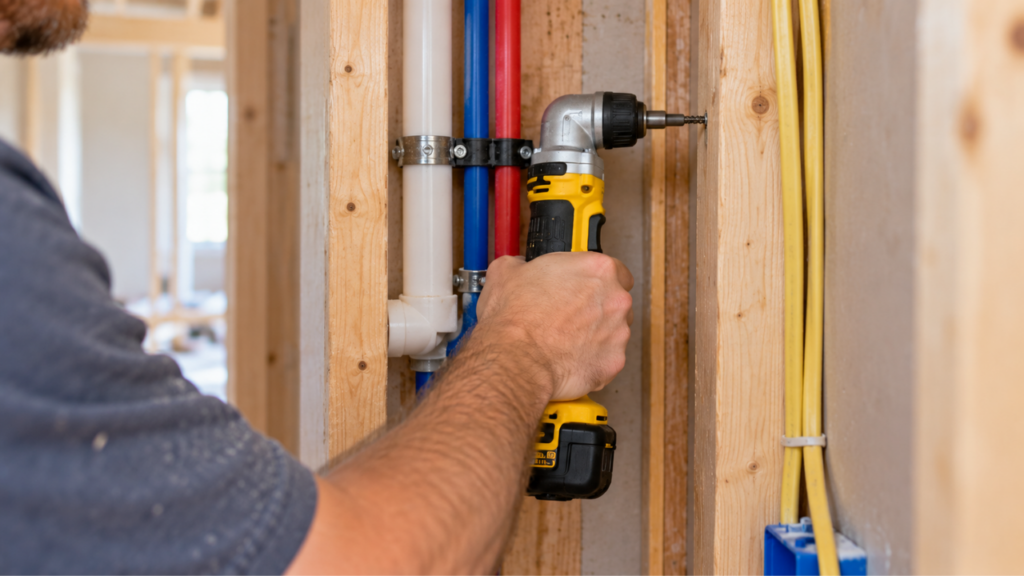
For a homeowner, that can be helpful when adding a fixture, running cable, installing a new line, or working in an unfinished utility area. Just remember that drilling into framing or near existing utilities requires extra care.
5. Driving Screws in Tight Spaces
A right angle drill is not limited to drilling holes. Many models can also drive screws and other fasteners.
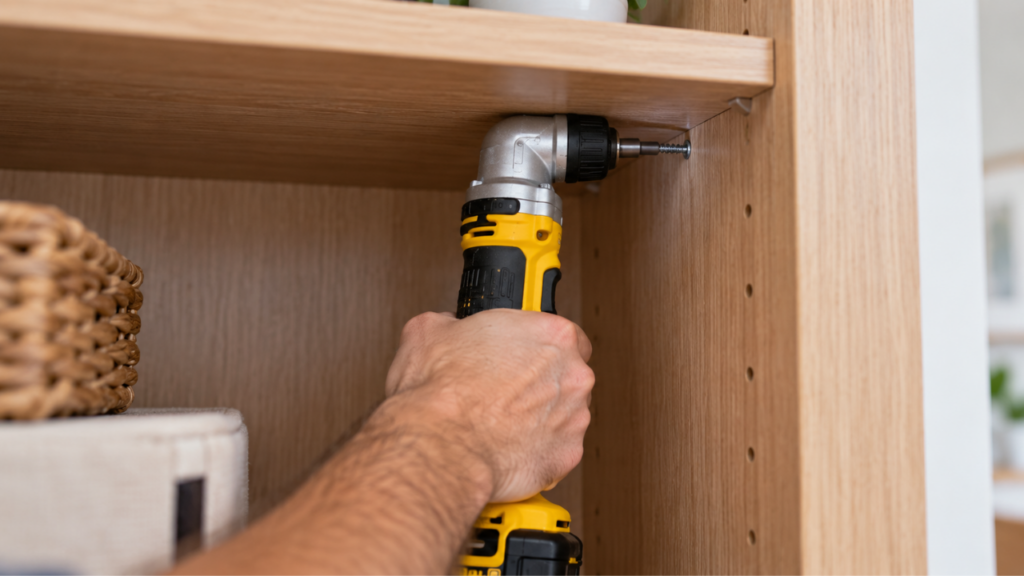
This can be handy underneath shelves, inside furniture, between framing, or anywhere your regular drill cannot get straight behind the screw. Start slowly so you can keep the bit seated in the fastener and avoid stripping the head.
6. Furniture and Woodworking Projects
Furniture repairs and woodworking projects can create some surprisingly awkward drilling angles. A right angle drill can help when installing braces, attaching supports, or working inside a partially assembled piece of furniture.
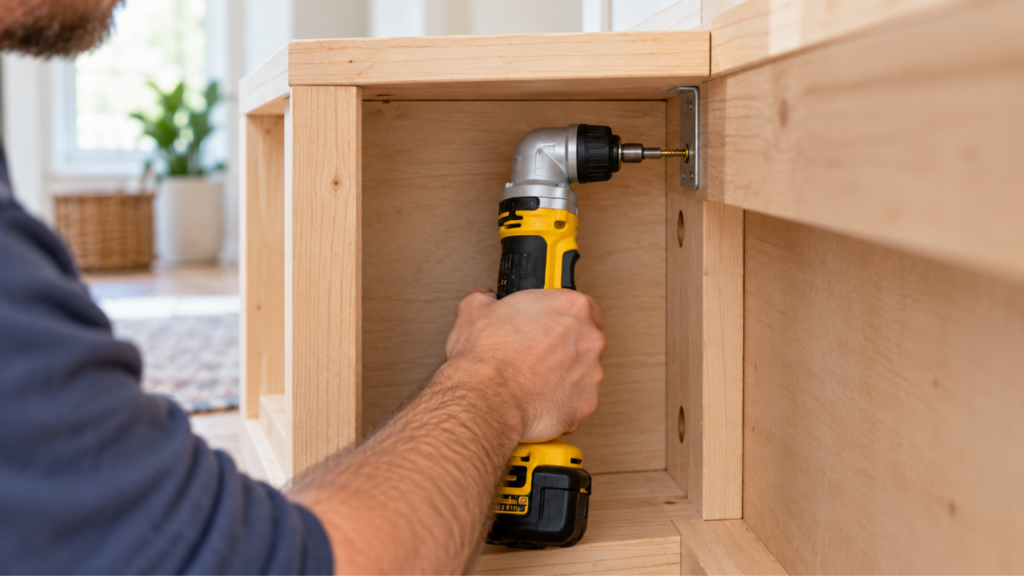
For everyday woodworking, I still prefer a regular drill when there is plenty of room. The right angle drill becomes valuable when access is the problem.
7. Boring Larger Holes in Framing
Some heavy duty right angle drills are designed to handle larger boring bits, hole saws, and other demanding drilling jobs in wood framing.
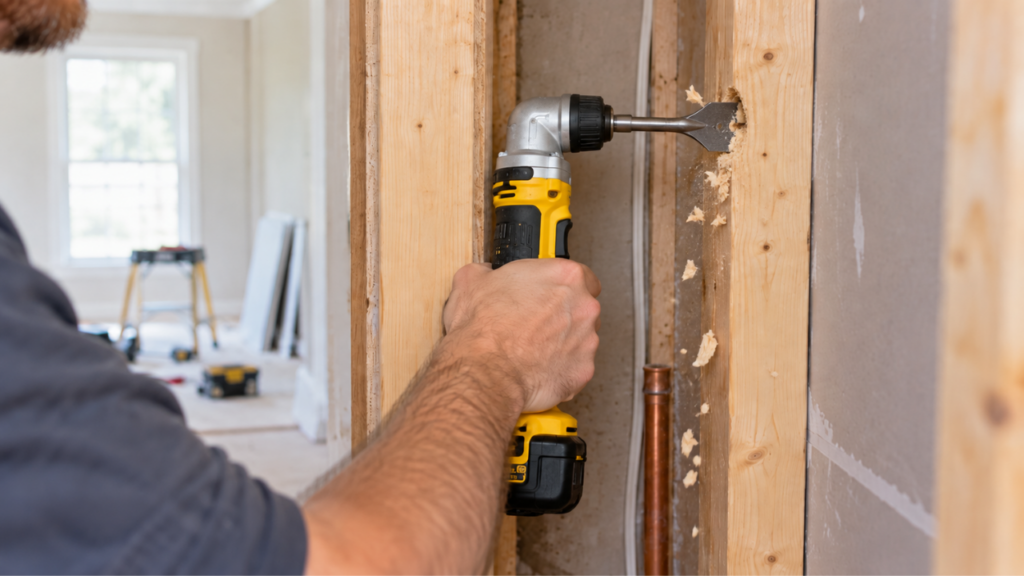
This is one area where you need to match the bit to the tool. A small compact right angle drill should not automatically be treated like a heavy duty framing drill. Check the manufacturer’s drilling capacity recommendations before using large bits.
Right Angle Drill vs. Regular Drill
| Feature | Right Angle Drill | Regular Drill |
|---|---|---|
| Best use | Tight and awkward spaces | Everyday drilling and driving |
| Head design | Short 90 degree head | Straight drill body |
| Access | Excellent in confined areas | Better in open areas |
| General DIY | Useful specialty tool | Better all around choice |
| Large hole drilling | Possible with properly rated models | Depends on drill power and design |
If you only own one drill, I would normally recommend starting with a good standard drill or drill driver. It handles more everyday jobs around the house.
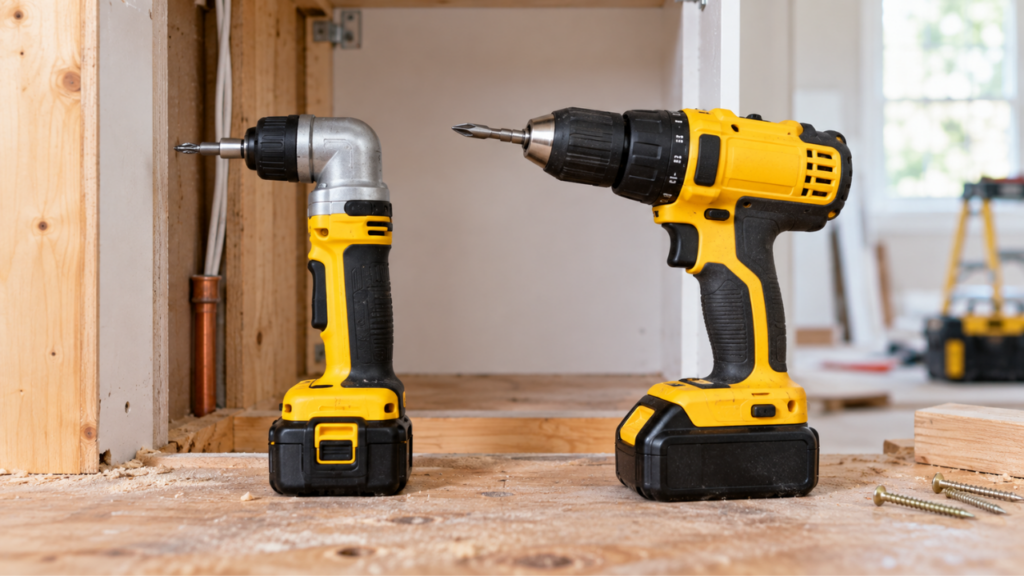
A right angle drill makes sense when tight space work starts becoming a regular part of your projects. It is a problem solving tool rather than something every beginner needs on day one.
Right Angle Drill vs. Right Angle Adapter
You do not always need to buy another power tool. A right angle adapter attaches to a compatible drill or impact driver and turns the drive direction 90 degrees.
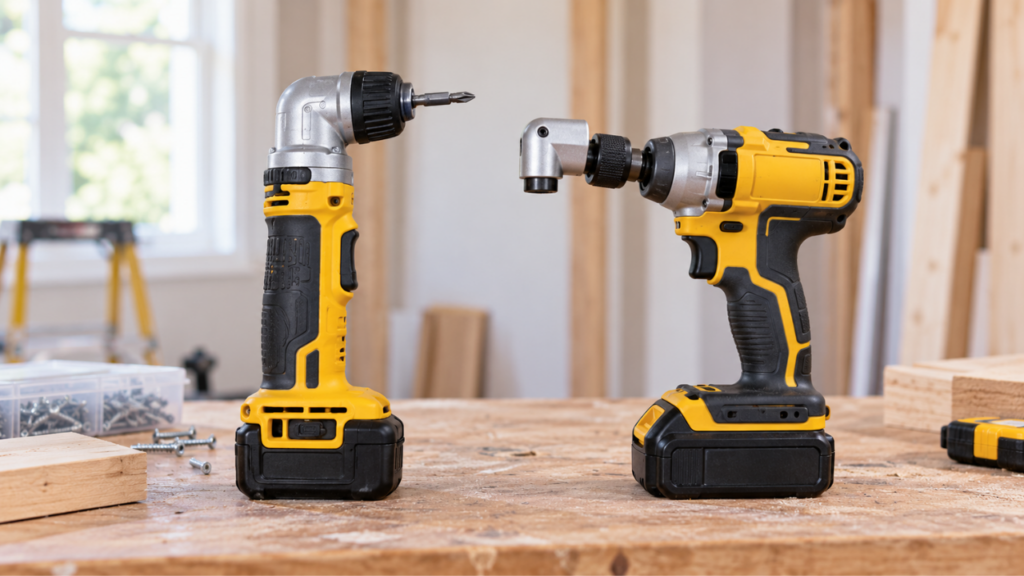
For occasional cabinet work, furniture assembly, or a few hard to reach screws, an adapter can be the more budget friendly choice. It takes up very little room in the toolbox and can solve a lot of small access problems.
A dedicated right angle drill usually makes more sense when you work in tight spaces frequently or need better control, drilling capacity, and durability. What it really comes down to is how often you expect to use it.
What To Look For In A Right Angle Drill
- Short head length: A smaller head lets the drill fit into tighter areas.
- Variable speed: Better speed control helps when starting holes or driving screws.
- Comfortable grip: Tight space work can put your wrist in awkward positions, so comfort matters.
- Chuck capacity: Make sure the drill accepts the bits you plan to use.
- Enough power for the job: Light cabinet work and large framing holes place very different demands on a drill.
- Battery compatibility: If you already own cordless tools, staying with the same battery platform can save money.
- Side handle on high torque models: Larger drilling jobs can create considerable reaction force, so use the handles supplied by the manufacturer.
How To Use A Right Angle Drill Safely
A compact tool can still produce plenty of force. I always recommend setting up the job before pulling the trigger instead of trying to correct your position while the bit is already spinning.
- Check the work area. Make sure there are no hidden wires, pipes, or other obstacles where you plan to drill.
- Choose the correct bit. Match the bit to the material and confirm it is within the drill manufacturer’s recommended capacity.
- Secure the bit. Make sure it is properly seated in the chuck before starting.
- Mark your drilling point. This makes it easier to keep the hole where you want it.
- Start slowly. Establish the hole before increasing speed.
- Keep the tool controlled. Use both hands or the supplied auxiliary handle when the tool and application call for it.
- Clear chips as needed. Back the bit out periodically when drilling deeper holes in wood.
- Wear eye protection. Wood chips and metal shavings can travel quickly in confined spaces.
Common Right Angle Drill Mistakes
Using Too Much Bit for the Drill
A compact right angle drill may look tough, but that does not mean it is designed to run every hole saw or boring bit in your toolbox. Check the tool’s capacity before tackling large holes.
Forcing the Drill
Let the bit do the cutting. Pushing too hard can create extra heat, dull the bit, and make the tool harder to control.
Ignoring the Exit Side of the Hole
Before drilling through a wall stud, joist, cabinet panel, or other material, know where the bit is going to exit. This simple check can help prevent damage to another surface or something hidden behind it.
Buying a Dedicated Tool When an Adapter Would Work
For a homeowner who only faces a tight screw once or twice a year, a right angle adapter may be enough. I always recommend matching the purchase to the work you actually do rather than filling the toolbox with tools you rarely use.
When Should You Use A Different Tool?
A right angle drill solves an access problem, but it is not automatically the best drill for every job.
- Use a standard drill or drill driver for general drilling when there is plenty of room.
- Use an impact driver when the main job is driving screws and other fasteners.
- Use a hammer drill or rotary hammer when the job requires drilling into masonry and the application calls for hammering action.
- Use a drill press or suitable drilling guide when repeatable precision is more important than portability.
The key is not trying to make one tool handle every job. The best tool is the one that gives you the right combination of access, control, and power for the work in front of you.
FAQs About What A Right Angle Drill Is Used For?
What is a right angle drill used for?
A right angle drill is used for drilling holes and driving fasteners in confined areas where a normal drill cannot fit easily.
Can a right angle drill be used as a regular drill?
Yes. Many right angle drills can handle ordinary drilling and light fastening jobs.
Can you use a right angle drill for large holes?
Some heavy duty right angle drills are designed for larger boring bits and hole saws, particularly in wood framing.
Final Thoughts On What A Right Angle Drill Is Used For
So, what is a right angle drill used for? I think of it as a problem solving drill for the spots where your everyday drill simply will not fit. Between studs, inside cabinets, around plumbing, and underneath projects are exactly the kinds of places where the angled head starts making sense.
You do not necessarily need one for every DIY project. If tight space work is occasional, a right angle adapter may be the smarter budget choice. If you regularly remodel, run wiring or plumbing, build cabinets, or work around framing, a dedicated right angle drill can save a lot of time and frustration.
The key is matching the tool to the job. Use the right bit, stay within the drill’s capacity, know what is behind your work surface, and you will have a much easier time getting clean holes in spaces that used to feel almost impossible to reach.

Willie Drew
I’m Willie Drew, and I’m here to help you turn your home into a space you’re proud to show off using simple projects, smart tools, and realistic budgets.